Today is the day that St. Walpurga was canonized – that is, added to the canon (official list) of saints (May 1, 870 CE.) She was an amazing woman. She was a scholar who knew English, German and Latin (those are the ones we are sure of because she conversed and wrote in those three, but probably more. She became a nun at the dual monastery at of Heidenheim am Hahnenkamm, and before the abbot named her the abbess, making her legally recognized in the Roman Catholic Church as a bishop! (Abbots of monasteries have the status of “bishop” over their community, and can even make liturgical alterations to better serve their community!)
We should be celebrating more women saints with more regularity.
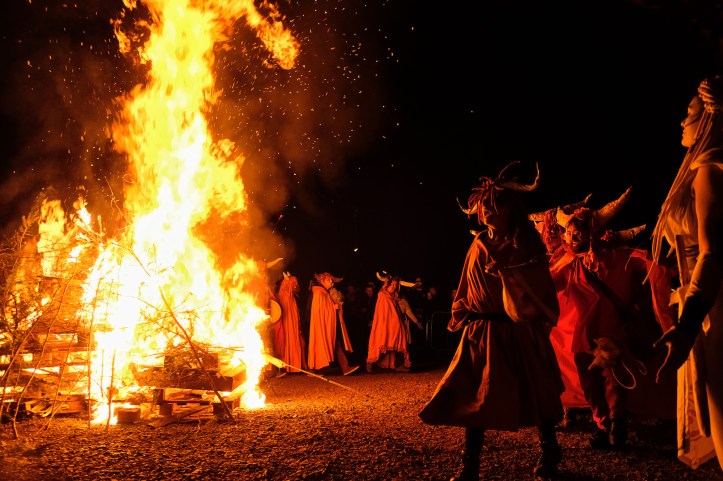
Last evening was St. Walpurgis Night, or Walpurgisnacht. Named after St. Walpurga, it is also called the night of the witches. On the wheel of the year it is on the direct opposite of Samhain (Halloween) and so is sometimes celebrated as a second Halloween, with dressing up in costumes to scare away evil spirits, setting off fireworks, and the lighting of bonfires.
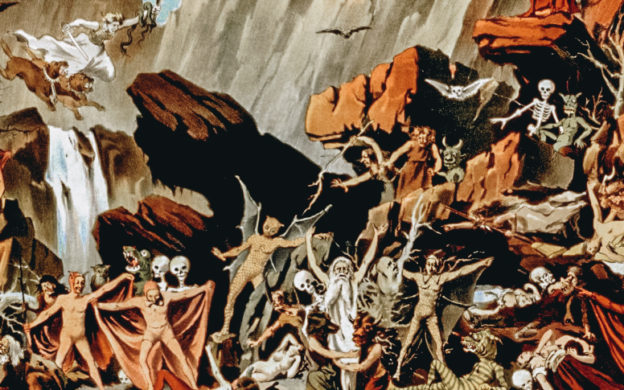
The evening is an auspicious one as it heralds the feast of Beltane among practitioners of traditional religions in Northern and Eastern Europe (and, in fact, the world over, today.) It was a time to light fires. The fires originally lit by farmers around their property to scare away predators from their cattle. That eventually transformed into the lighting of two fires, then leading cattle between them to ensure fertility. The fire can also be a literalization of the metaphor of the fires of passion, and Beltane became a celebration of the passion of love, sex and fertility.
This has not been a great year, as many of us are quarantined in our homes, attempting to stem the spread of Covid-19. Perhaps we should be giving St. Walpurga her due, as she also studied medicine and is invoked against sickness and plague (among many other things, including people caught in storms and sailors!) And, also, as her canonization is on Beltane, we might light a bonfire (or a candle) to ward off evil and sickness and welcome health and fertility.
Honestly, Walgurgisnacht has such a deep and complex history that I am not doing it justice with my random rambling thoughts. Perhaps I’ll expand this at a later date.
 acorns2oaktrees