Let me start by saying that I liked the Nickelodeon animated series “Avatar: The Last Airbender”; a lot. Stylistically, it was a gentle introduction to the style of animation known as “anime” for viewers who may not have been formally introduced to the popular Japanese genre. Artistically it was an animated home run.
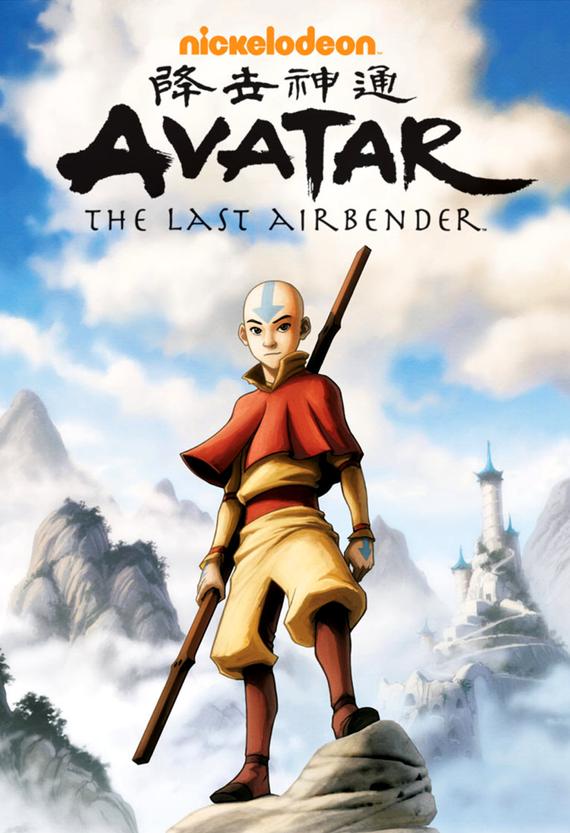
During the story arch we journey with Aang, the main character, who was the last of a race of people who was ethnically cleansed by the imperious, Nazi-like Fire Nation who are bent on a military take-over of the world. A very heavy theme for what some might consider a children’s cartoon. As it turns out, Aang is also a link in a Dali lama like chain, and is himself the spiritual reincarnation of the long line of “Avatars” who are meant to help restore and keep harmony and balance in an ever chaotic and self destructive world. The avatar achieves this through mastery of all four elements (Earth, Fire, Water, Air), each of which is mastered through a certain traditional martial arts style. The series does a very good job of combining beautiful art (in an anime-esque tradition), with meticulous attention to detail in the representation of various martial arts styles (that actually do exist), with a very clever mythology that is at once unique to Aang’s world, and relatable to us in ours.
It would have been easy for the writers of the series to have targeted the more popular elements, such as intense martial arts fighting, and flashy “magic” manipulation of the elements, in an attempt to draw in an audience that is increasingly struggling with Attention Deficit Hyperactivity Disorder. But, to their credit, they do not.
Each of the martial styles is grounded in a mythic and meaningful spirituality. Part of the joy of the series is learning, along with the characters, the importance and mystery of a spirituality and tradition, that is only mastered as we master ourselves.
My own encounter with the series coincided with my own foray into the world of martial arts in a martial discipline called Akido. Akido is a way of life that seeks balance. It seeks to restore balance and harmony in places where it might have been lost. It is not aggressive.
Aang is every bit a young boy – goofy and inquisitive. But even with his age appropriate silliness, he has a profound respect for mystery and tradition – as well as the people who exemplify them.
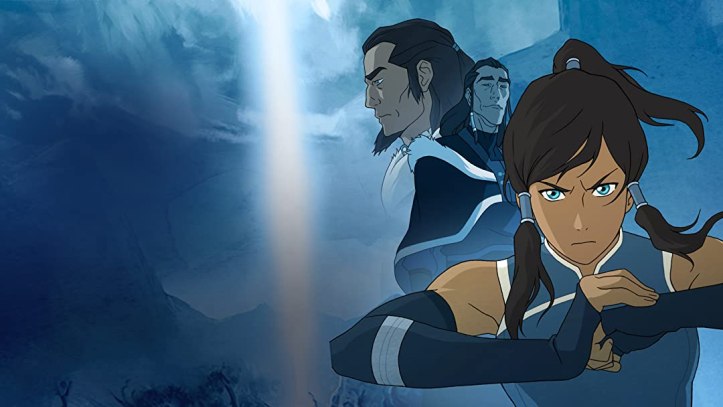
The Legend of Kora begins in a post-Aang world; the Fire Nation overcome, and balance restored. The result is a world of united nations living together in peace. But now the threat is not external – in the form of an aggressive nation seeking to dominate the world, but the threat is internal. The violence is inside of the cities, Republic City specifically, in the form of crime and social injustices that seem to be endemic in a post-industrial world; the kind of internal violence that some have come to expect – and hence accept. The internal threat of the metropolis is mirrored in the new Avatar, Kora, a teenage girl who has as much control over her own impatience and recklessness as the police have over the crime in the streets. She is frenetic, and impetuous. She shows little to no self control and unlike her spiritual predecessor, she has no respect for mystery and tradition or for those who exemplify them. She is, in a sense, an anthropormorphization of society: frenetic and hectic, self-absorbed and completely unaware of the value to be found in “the other.”
In this brave new world, the martial arts have devolved into popularization. The deep and rich spiritual heritage of the art has been stripped away from the practice so that all we are left with is a fighting style useful for show and display. It has turned into a competitive sport, completely devalued of its connection with discipline.
As I watched the first two episodes, I was revolted by Kora’s lack of respect, her impetuousness, her complete lack of grace, her serious self-absorption and her detrimental disconnect from spirituality and tradition. But, by the end of the second episode (which is the intentional second part of a two part introduction to the series), I realized that she is disconnected in all the same ways that society is disconnected. She is the Avatar and as the Avatar she is meant to restore balance. I expect that as the series progresses, she will learn balance and as she does she will bring balance back to the society that she mirrors.
Here’s hoping.
 acorns2oaktrees