No matter how high the resolution of an image that you see, either digitally or in print, nothing compares to the experience of standing in front of the absolute reality of the thing itself. There is a dialogue that occurs between the viewer and the viewed which makes the experience meaningful and dynamic. That experience, for me, is intense and personal. That’s why I can’t go to a museum and do the roller-derby-whirlwind-skate-through to “see” as much as possible. For me, that would be tantamount to seeing nothing at all. When I go, I need to budget time and energy for the energetically sapping, but life-giving, work of “The Dialogue.” That necessary and expected expenditure of personal power limits me to few galleries, or sometimes just a few works, to spend time with.
Back in February 20, 2016, we started our visit to the
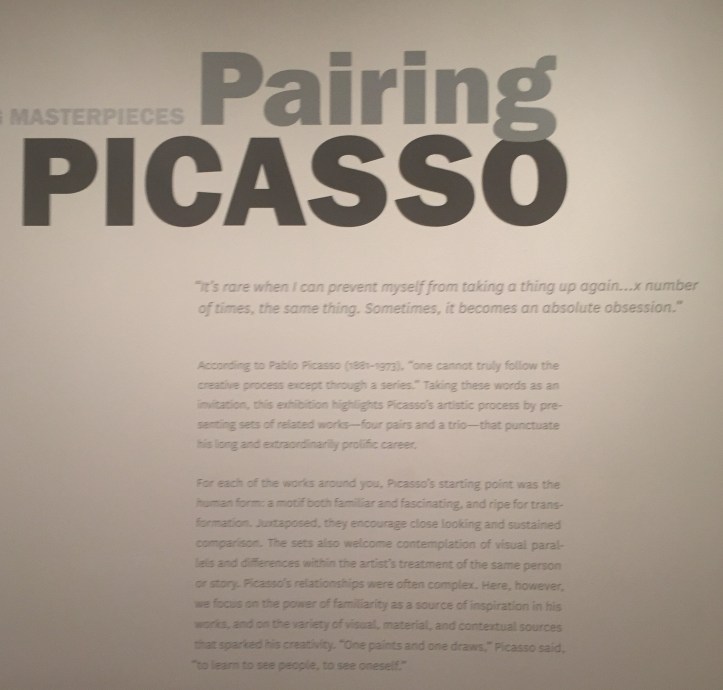
MFAby spending some quality time with some of Picasso’s work in a small, but powerful, exhibition titled, “Pairing Picasso.” I was especially taken with “The Rescue” and “The Rape of the Sabine Women.” The latter was one of many that he painted using that title. This one is a black-and-white oil on canvas that is, for me, one of the most disturbingly eloquent pieces that I have seen in person; reaching into the soul and communicating the horror of rape. The Roman astride the horse is shadowy and inhuman, in fact, the only humanity in the painting is in the face of the woman being violated. There is no graphic representation of sexual act, because the primary act of rape is not sex, but violence and trauma, which is graphically depicted by a hauntingly horrific horse – with hollow eyes and demonic grin trampling the naked and vulnerable victim. The expression has been transferred from the rider to the ridden, so that our primary focus of the evil is the horse – shouting with intensity the animalistic nature of the act.
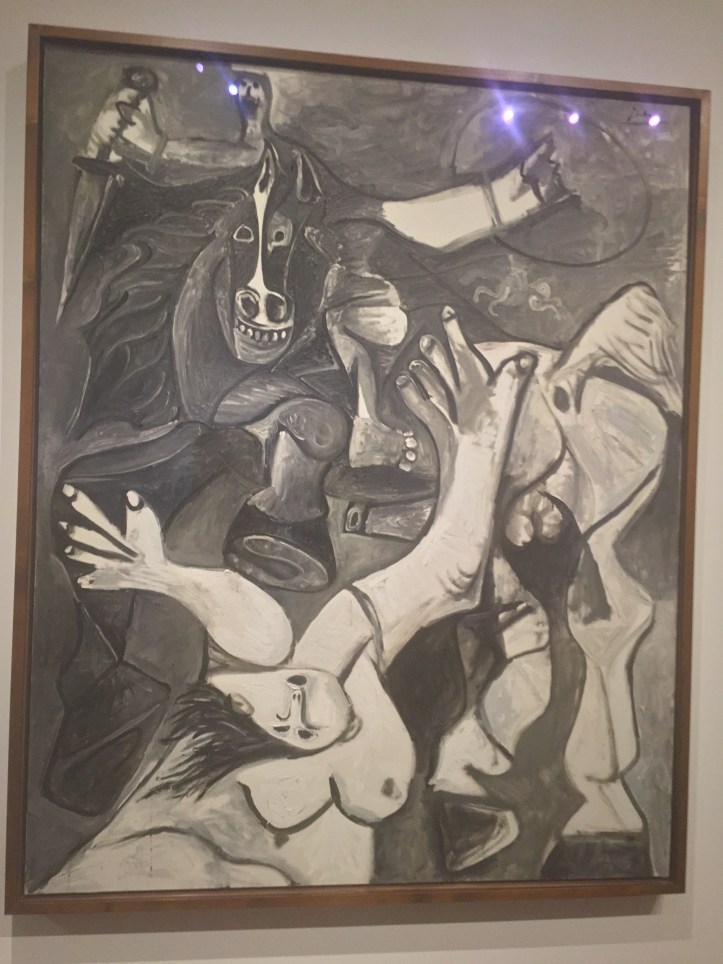
Picasso, The Rape of the Sabine Women
There is, on the right, underneath the rider’s shield carrying arm, what I interpret to be a disembodied heart: Is it stating the heartless nature of the act? Or, is it the humanity that has been torn out of the victim? Or, both?
Juxtaposed to this was “The Rescue.” In this picture the dominant greens and blues pull out of us calm and compassion. The rescuer gently reaching under to scoop up the other, almost as one might hold an infant. Here humanity is expressed in all of the faces. The gentle concern of the rescuer and the fragility and vulnerability of the rescued. It, at once, gives a feeling of hope and concern.
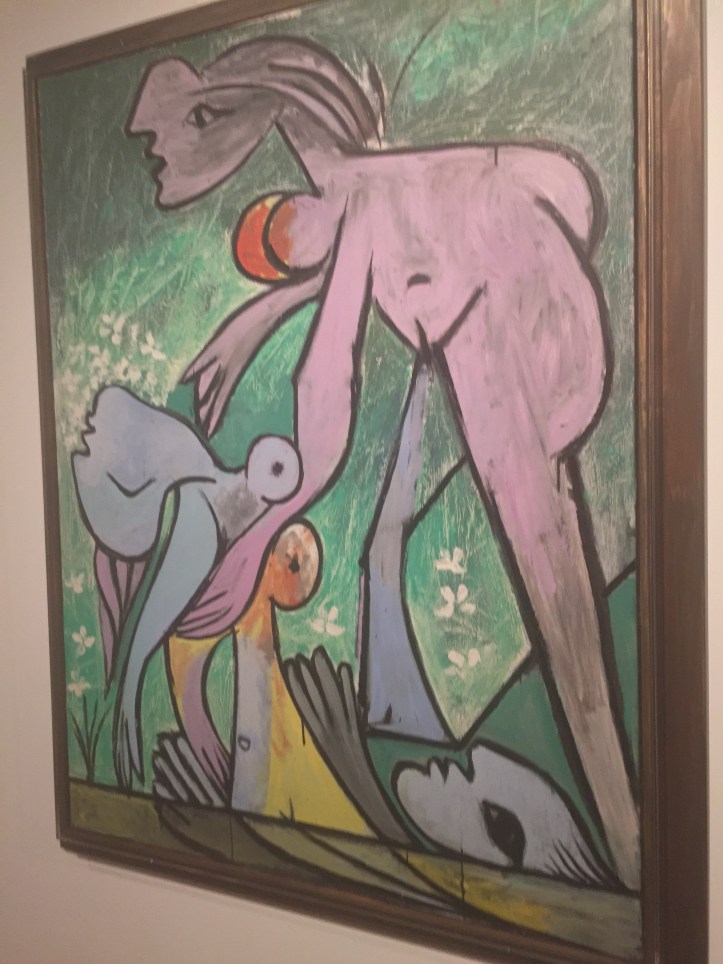
Picasso, The Rescue
I could have spent even more time with just those two.
 acorns2oaktrees